

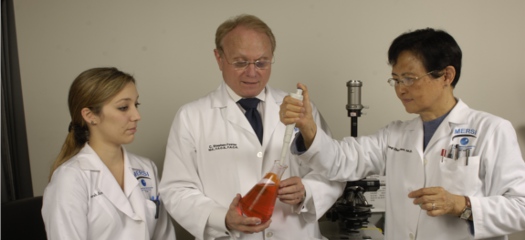
Ocular Immunology and Uveitis Foundation (OIUF) offers unique opportunities for education, training, and research in the field of ocular inflammatory diseases. These programs are in partnership with our main clinical site, Massachusetts Eye Research and Surgery Institution (MERSI).
Please Note: The MERSI/OIUF Fellowship Program is not affiliated with a hospital or university. As such, the program cannot sponsor visas for international visitors. All internationally trained applicants must arrange visas and unlimited medical licenses from the Commonwealth of Massachusetts (if applicable) on their own prior to applying.
Program Preceptors
Dr. Stephen D. Anesi, MD, FACS
Co-President & Partner, MERSI
Board Member & Fellowship Preceptor, OIUF
Dr. Peter Y. Chang, MD, FACS
Co-President & Partner, MERSI
Board Member & Fellowship Preceptor, OIUF
Dr. Carl S. Wilkins, MD
Associate Physician, MERSI
Fellowship Preceptor, OIUF
MERSI/OIUF Fellowship Program Opportunities
Clinical Fellowship
The OIUF Clinical Fellowship program is offered to those who have completed an Ophthalmology residency and have (or can obtain) an unlimited license to practice medicine in the Commonwealth of Massachusetts. This program is compliant with the Association of University Professors of Ophthalmology (AUPO FCC compliant). Each fellowship is a year-long position.
How to Apply:
Research Fellowships
Research and Pre-Residency Fellowship positions do not require a license to practice medicine. Fellows will see patients daily under the supervision of licensed clinical preceptors but may not independently perform medical procedures, surgeries, or other activities restricted to licensed physicians, in accordance with state law. An emphasis on clinical research will be incorporated into this program.
How to Apply:
○ Cover letter
○ CV
○ Personal statement
○ Proof of educational accomplishments
○ Letters of recommendation
For any additional information with regard to OIUF’s Ocular Immunology Fellowship Program at MERSI, please contact: Scott Evans (sevans@mersi.com).
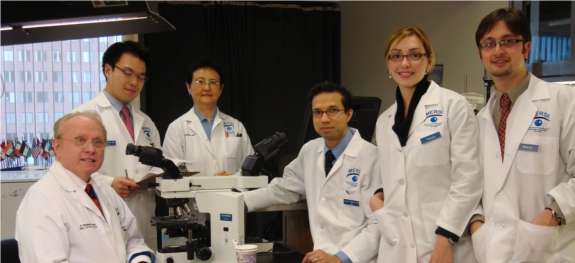
Ocular Immunology Fellowship Program Overview
Our major goal is to provide a resource for individuals who are determined to become the best that they’re capable of becoming: from a personal, character point of view, as well as from a physician/clinician/caretaker point of view and from a restless, question-asking, scientist point of view.
The level to which we succeed in our goal is mirrored by the behaviors of the individuals completing the Fellowship training program: behaviors both from a character/social perspective and from a clinician/scientist perspective. We have reason, so far, to believe that the program accomplishes its goal. Some Fellows take more with them from this environment than do others. All, however, have selflessly recognized the quid pro quo for the benefits they derive from the program: 100% dedicated effort to the Fellowship training program while in it, total commitment to the patients for whom they are responsible, and absolute honesty and scientific integrity.
Stephen Foster, MD, FACS, FACR, Founder of MERSI and OIUF
Educational Goals
The primary goals of the OIUF Fellowship at MERSI are to develop diagnostic and therapeutic skills in caring for patients with destructive ocular diseases mediated by abnormal autoimmune or infectious processes, as well as an enhanced understanding of general ophthalmic disease, and to develop an information base in basic ocular immunology, with associated research skills, to facilitate appropriate total care of patients with ocular inflammation and any associated secondary comorbidities. Fellows are expected to utilize their growing understanding to formulate and lead their own research projects to be submitted for publication throughout the year.
Basic Objectives
Differential diagnosis, evaluation for formulation of diagnostic strategy, and management of the following diseases and associated co-morbidities:
Familiarity with the following clinical skills will be gained/assessed:
Additionally, fellows will gain ample experience in conditions of general ophthalmology, including medical and surgical interventions, and how these can be managed in patients with ocular inflammatory disease. This consists of conditions such as dry eye, glaucoma, cataracts, retinopathy, medical and surgical retina, in patients with OID or otherwise, etc. Additionally, it is to be emphasized that the proper, safe use of cytotoxic and biologic drugs requires significant medical training and experience, and significant, frequent, longitudinal experience in the use of such agents, recognition of complications induced by these agents, and management of such complications.
Our teaching emphasizes the case method approach in which each patient is to be examined initially by the Fellow and then formally presented to the attending staff member for discussion of diagnosis and treatment. Clinical work will be the primary source of education for this fellowship. Additional readings and pertinent references from suggested readings will often supplement clinical experiences. Used properly, this will provide the opportunity for recognition and diagnosis of disease and will be the stimulus for in depth reading about each disease entity.
Clinical Activities
Fellowship training will take place at MERSI in Waltham, MA, a comprehensive outpatient clinic that provides tertiary care to not only uveitis and OID, but many subspecialties of Ophthalmology, including dry eye, cataracts, glaucoma, and medical & surgical retina. MERSI houses a blood lab, pathology lab, infusion suite, minor procedure and laser rooms, and is conveniently located above an outpatient surgery center where our surgeons practice.
The clinic is in operation Monday through Friday as well as on one Saturday per month.
Clinical training will be supplemented by lectures from preceptors and guest speakers, presentations from fellows and regular laboratory meetings to discuss progress of individual research projects. Research, presentation, and/or publication of interesting cases or series by fellows is strongly encouraged, especially for Research and Pre-Residency Fellows. We believe that a doctor is a better physician as a result of carefully analyzing a case, reviewing the literature, and reporting the case than by not doing so. We also have the opportunity to present to the scientific community new and/or rare cases and the outcomes associated with our care.
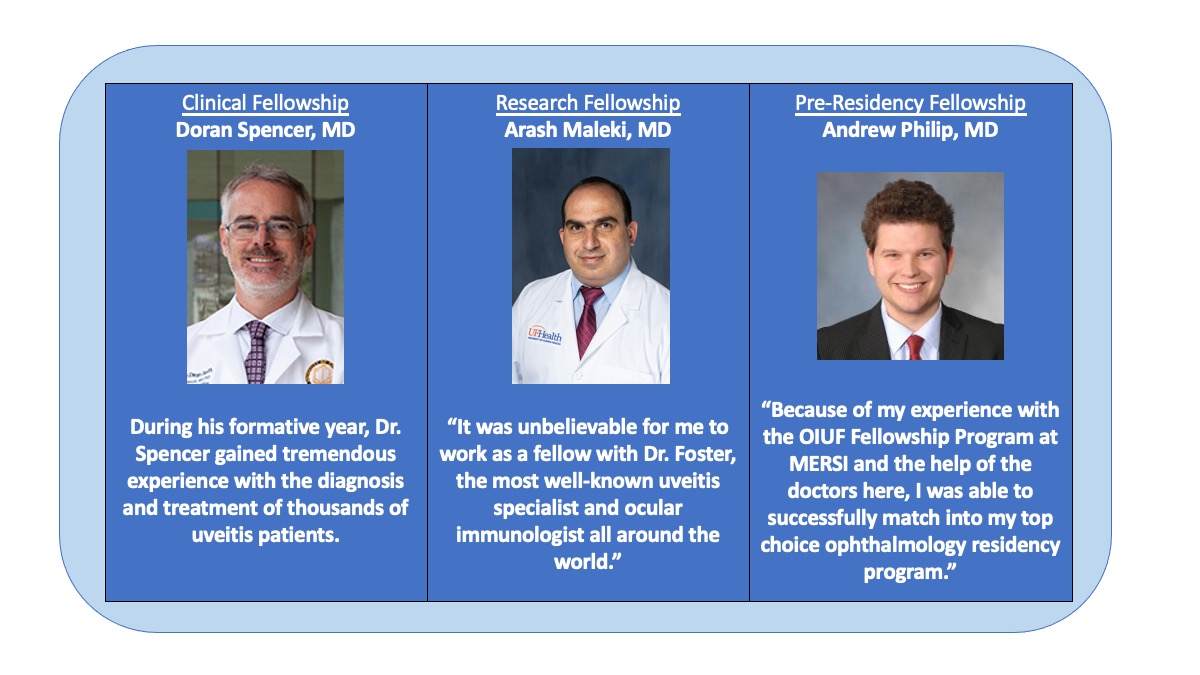
Testimonials
Pre- Residency Fellowship
Drew Philip
I came to the OIUF Fellowship Program after graduating medical school in order to bolster my application to ophthalmology residency programs. To say it was an incredible experience is an understatement. Working in the clinic at MERSI vastly improved my ophthalmology knowledge base, both in general and specifically in ocular inflammatory disease. The teachings of the attendings significantly improved my clinical skills far beyond what I had imagined was possible when I first started. I was also able to be involved in a significant amount of clinical research, both helping with ongoing projects and initiating projects of my own. This amounted to numerous peer-reviewed publications and presentations at both regional and national meetings. At the end of it all, I was able to match into an ophthalmology residency program that I was passionate about and was my top choice. With my newfound knowledge of ocular inflammatory disease, I am planning on specializing in this field upon completing my residency training.
 |
|
|
|


Click on the Register link
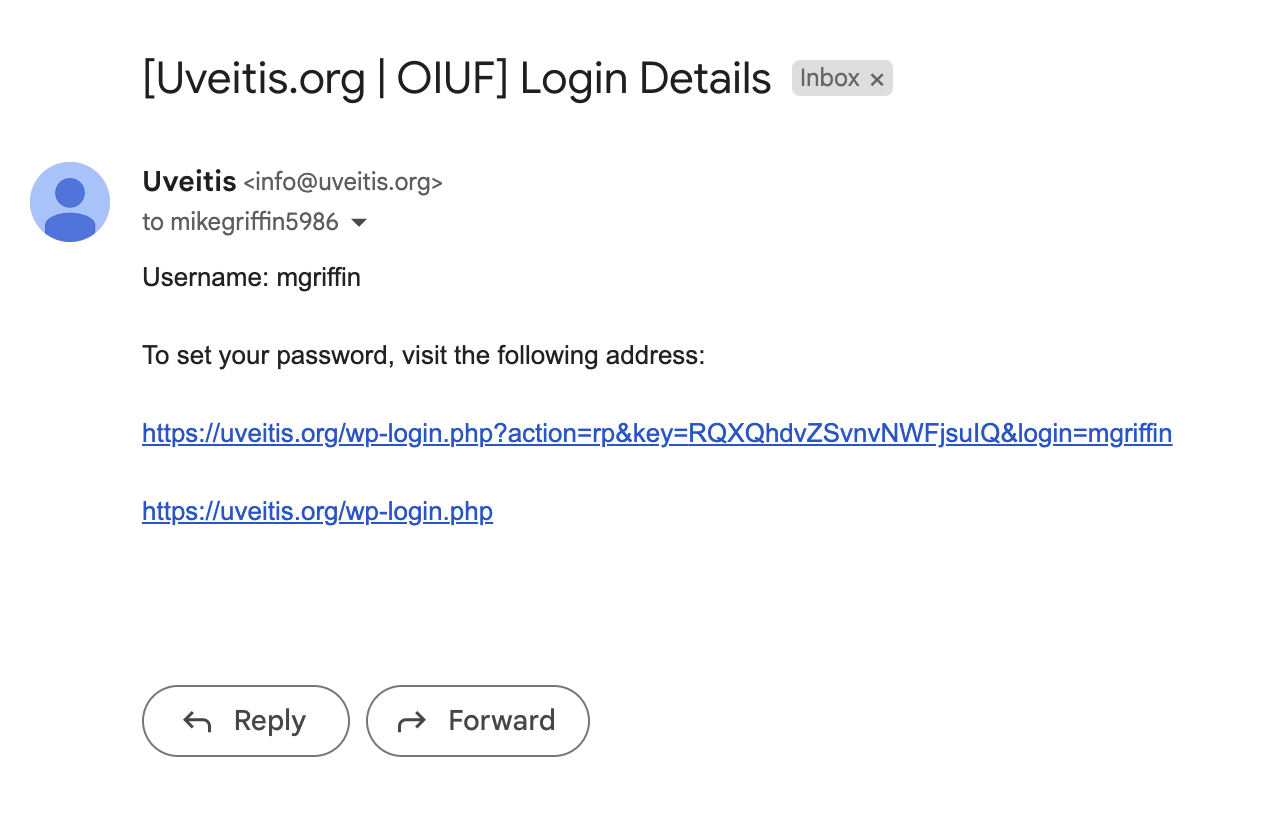
In the email you receive, click on the change password link.
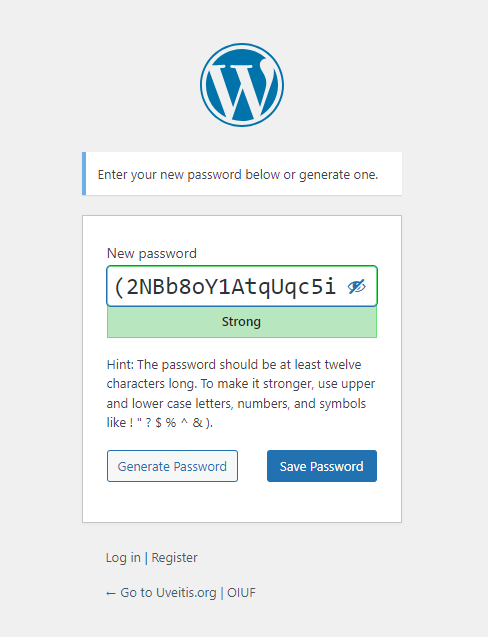
Change your password